
Issued: July 13, 2025 | Toronto / Goma / Kigali
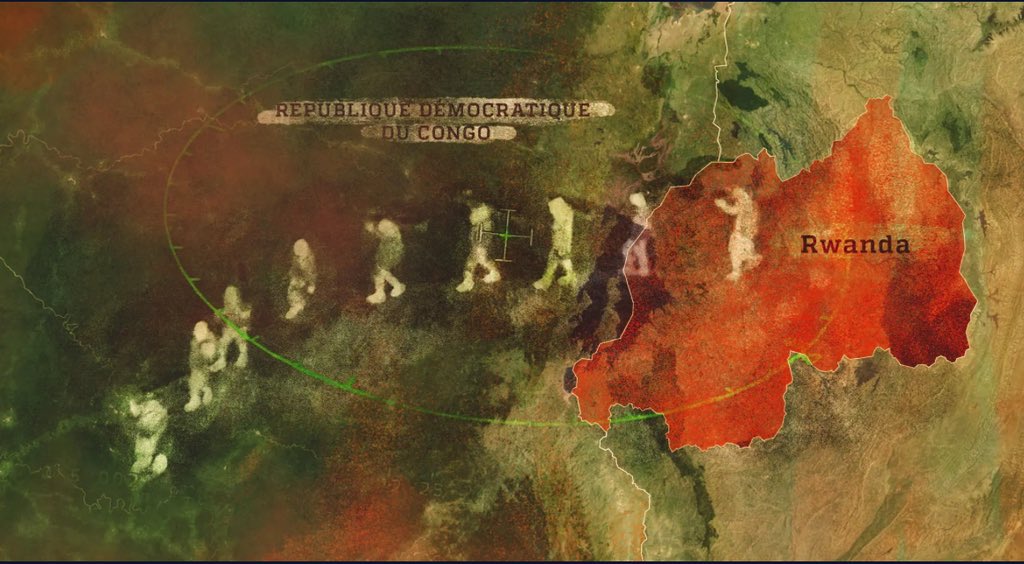
Rwanda continues to present itself as a regional peace broker while deploying its own forces and supplying M23 with logistics, intelligence, and weapons as repeatedly confirmed by UN Group of Experts reports, regional intelligence, and international watchdogs.
This duality aggressor as mediator is a gross distortion of international norms and a threat to the rule of law in Africa.
The M23’s territorial demands in Doha expose the true nature of the conflict: the planned annexation and fragmentation of Congolese territory, designed to benefit Rwandan commercial, political, and military interests. Natural resources, including coltan, gold, and rare earth minerals, are being extracted from occupied areas, often using forced labor or illegal trade routes into Rwanda.
⚖️ Appeasement Has Enabled Atrocity
The silence or strategic ambiguity of international actors has enabled Kigali’s aggression to continue with near impunity. Peacekeeping mandates have been weakened, and despite evidence of violations, few concrete consequences have followed.
Regional organizations like the East African Community (EAC) and the African Union must take a clear position: a member state funding and commanding an armed proxy inside another sovereign state is a violation of both the AU Charter and international law.
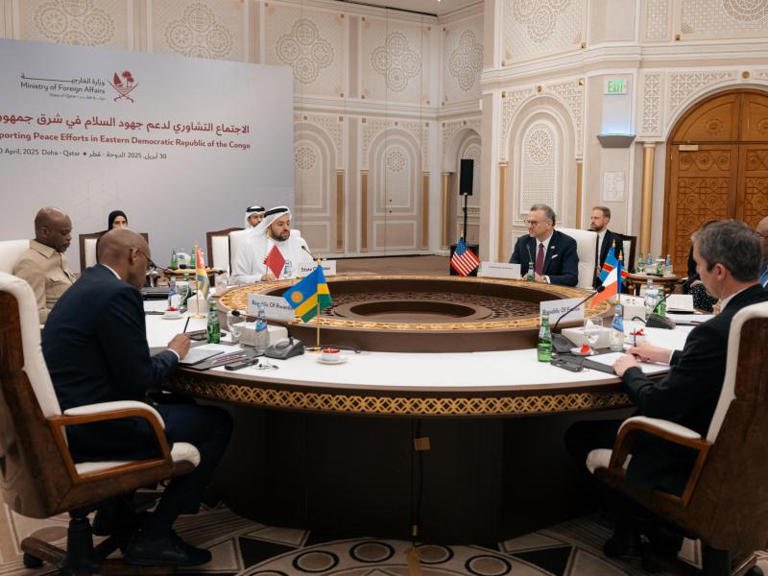
In the recently concluded Doha talks, the rebel group M23, fully armed and directed by the Rwandan government under President Paul Kagame, demanded an 8-year control over North and South Kivu provinces in the Democratic Republic of Congo (DRC). This demand is nothing short of a formal request for the international legitimization of foreign occupation.
The Congolese delegation rightly rejected the proposal an attempt to cement M23’s grip on territories it has violently seized since 2022. The ongoing situation is not a civil conflict. It is a foreign military aggression masked as internal rebellion.
The Congolese delegation rightly rejected the proposal an attempt to cement M23’s grip on territories it has violently seized since 2022. The ongoing situation is not a civil conflict. It is a foreign military aggression masked as internal rebellion.
A Human Rights Crisis Deepens in Eastern Congo
Since M23’s resurgence in 2021, the humanitarian situation in eastern Congo has deteriorated into one of the world’s most neglected crises:
Over 7 million people are currently displaced within DRC, primarily from North Kivu, South Kivu, and Ituri (OCHA, 2025).
Sexual violence has surged, with countless women and girls assaulted by armed groups, including documented cases implicating M23 fighters (UNJHRO reports).
Civilians in areas under M23 control report extortion, forced recruitment, child soldiering, and massacres.
Entire villages have been emptied, schools turned into military bases, and humanitarian corridors blocked or manipulated for propaganda.
What we are witnessing is systematic persecution, ethnic cleansing, and population engineering by a foreign-backed militia with state-level support from Rwanda.
Rwanda’s Role: From Alleged Mediator to Military Occupier
Rwanda continues to present itself as a regional peace broker while deploying its own forces and supplying M23 with logistics, intelligence, and weapons as repeatedly confirmed by UN Group of Experts reports, regional intelligence, and international watchdogs.
This duality aggressor as mediator is a gross distortion of international norms and a threat to the rule of law in Africa.
The M23’s territorial demands in Doha expose the true nature of the conflict: the planned annexation and fragmentation of Congolese territory, designed to benefit Rwandan commercial, political, and military interests. Natural resources, including coltan, gold, and rare earth minerals, are being extracted from occupied areas, often using forced labor or illegal trade routes into Rwanda.
⚖️ Appeasement Has Enabled Atrocity
The silence or strategic ambiguity of international actors has enabled Kigali’s aggression to continue with near impunity. Peacekeeping mandates have been weakened, and despite evidence of violations, few concrete consequences have followed.
Regional organizations like the East African Community (EAC) and the African Union must take a clear position: a member state funding and commanding an armed proxy inside another sovereign state is a violation of both the AU Charter and international law.